
We are the fire animal.
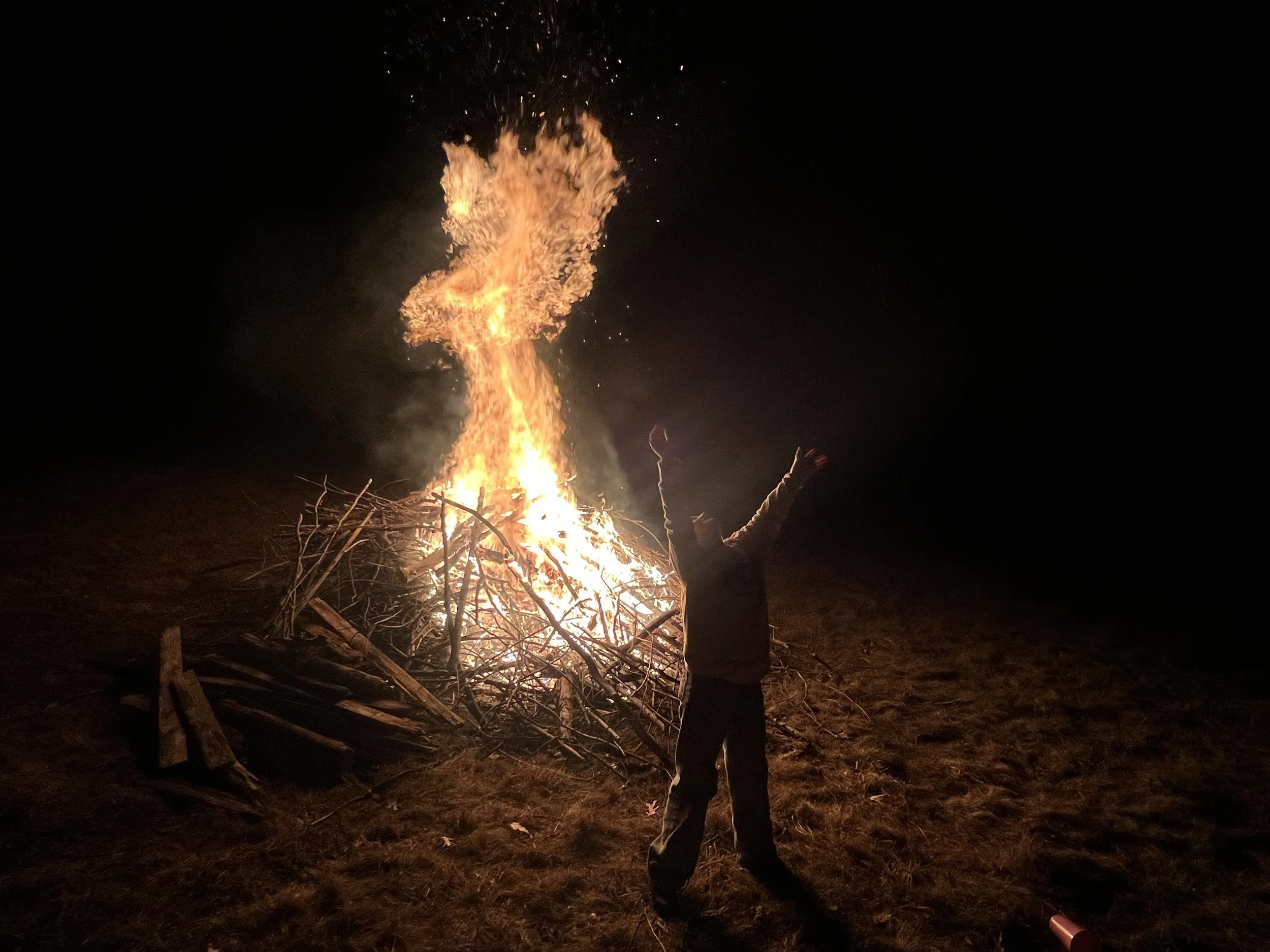

Humans have harnessed fire for hundreds of thousands of years, working with it to create abundant food forests and healthy ecosystems. This is true not just in North America, but all over the world. In our own home landscape of Cape Cod, the upland forests have evolved with human burning—and in fact, have come to rely on it. Fire-adapted species including fruit and nut bearers in both the canopy and the understory count on regular fire to regenerate and stay healthy.
For the past century, intentional fire all over North America has been suppressed. The results: reduced biodiversity, increased fuel loads, and increasingly alarming and intense wildfires—as we've seen both locally and beyond.
The Challenge
The largest tract of woodlands on the Outer Cape is managed by the Cape Cod National Seashore. Currently, one person oversees fire management for 44,000 acres and lacks a trained crew. This makes it very difficult to perform regular burns.
This moment demands local action. As federal funding retreats from our public lands, community stewardship must rise to meet it. The ecosystems of the Outer Cape rely on fire to stay healthy. As our climate changes, putting 'good fire' on the land has become more important than ever—but very few of us are trained to do it.
CommonsKeepers aims to change that.
What We’re Building in 2026
A trained community volunteer crew:
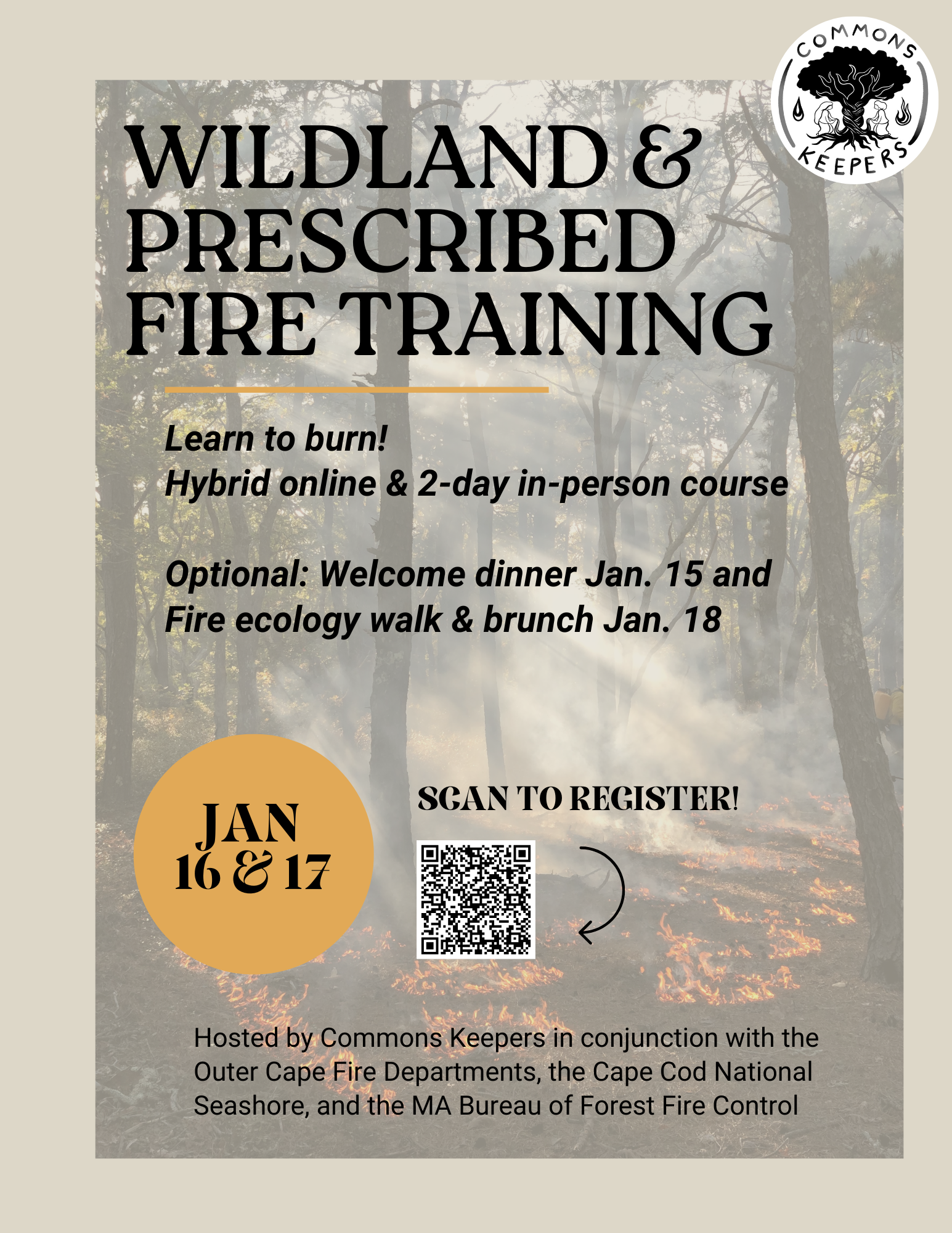
We’re working to build a crew of 30 Wildland Firefighters on the Outer Cape to assist on prescribed burns. We are specifically working to engage populations underrepresented in this field – women, young people (ages 18-25), and Indigenous community members.
“Ignite” Burn Fund:
Stipends for volunteers on controlled burns, plus protective gear including kits sized for women and smaller-bodied people.
Advocacy for prescribed burning:
Pushing for a revival of burns in the Seashore and on local conservation lands through fire ecology walks, media, direct advocacy, and community-wide Wildfire and Ecology gathering planned for spring 2027.
FireKeepers:
Our June FireKeepers Gathering will bring 15 young women together for a 5-day retreat to support their deepening relationship to fire. Our time together will include fire meditations, ceremony, medicine-making, and exploration of career paths in fire ecology.
About the January 2026 Training
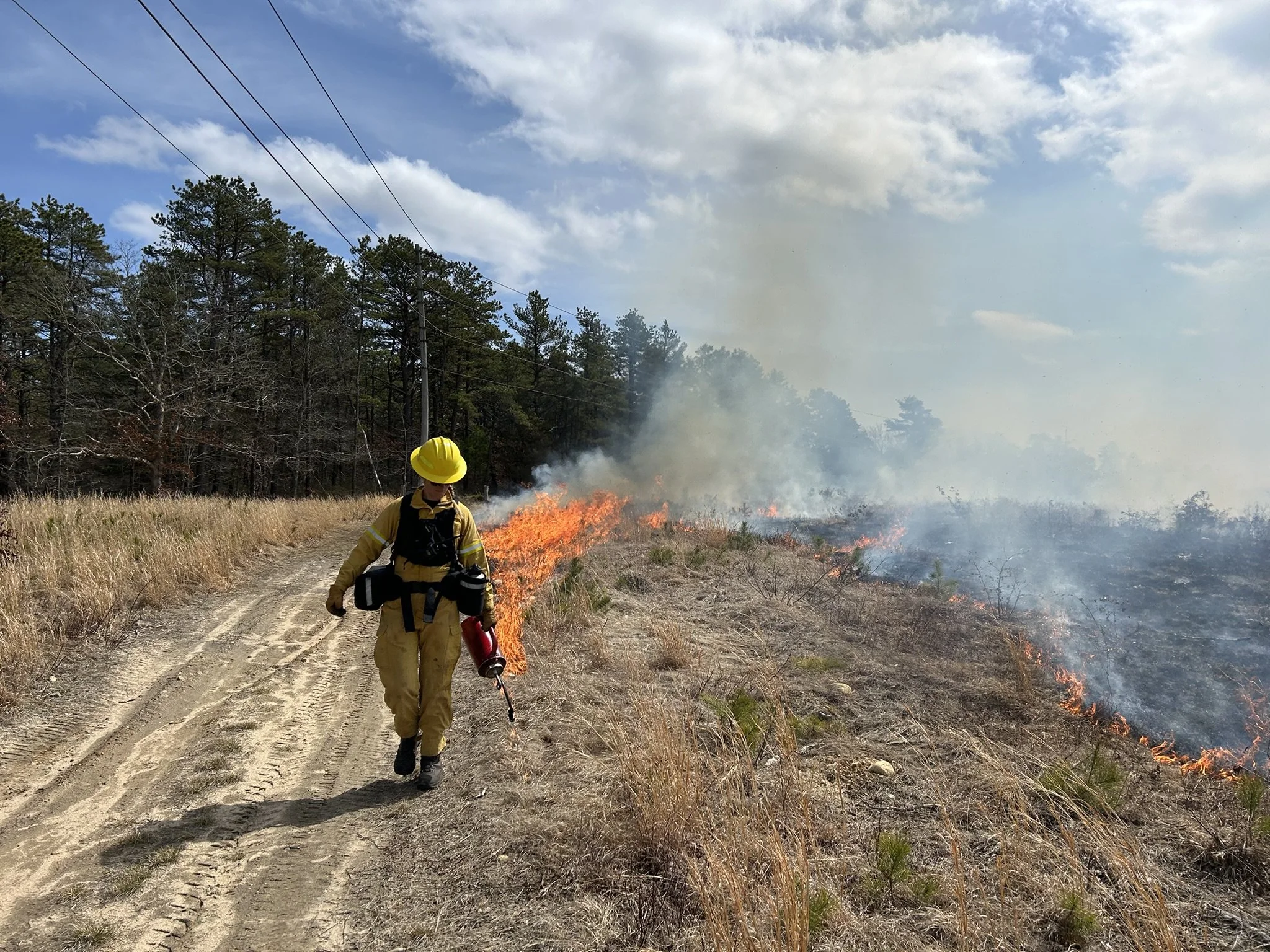
Wildland Fire Training — January 15–18, 2026
A blended in-person and online training in partnership with the Massachusetts Bureau of Forest Fire Control, the Outer Cape Fire Departments, and the Cape Cod National Seashore.
Classroom training (required for certification) takes place Friday and Saturday (January 16–17); lunch will be provided. Online coursework must be completed before a spring field day.
CommonsKeepers is also hosting two optional add-on events:
Opening dinner and fire ceremony, Thursday evening, January 15
Fire ecology walk, brunch, and medicine-making workshop, Sunday morning, January 18
Frequently Asked Questions
-
The training will be January 16th & 17th from 9am-5pm. On Thursday, Jan 15th at 6pm, there will be an opening dinner and fire ceremony at a home in Wellfleet for all who wish to attend. On Sunday, Jan 18th, there will be a fire ecology walk 10am-12pm followed by brunch and a fire medicine making workshop from 12pm-3pm in Wellfleet.
-
Once you have completed the training, the required online coursework (see below), the field day, and the pack test (see below), you will received your Wildland Firefighter Type 2 Certification. Once you have this certification, you can be hired to do paid fire work (when/where positions are available), as well as volunteer on fires.
-
The pack test is a physical test required for gaining certification. There are options for both arduous and moderate pack tests, however you only need to pass the moderate test to go on prescribed burns. For wildfires, you need to pass the arduous test.
These tests are conducted in late April and May by the state, and usually the closest location to us is near the Sagamore Bridge. Certified firefighters must complete the physical test and a one day refresher every spring in order to keep going on burns.
Once you’ve completed this training, you’ll be added to the email list for pack test dates and additional info.
-
All Courses are a blended program with both online and field work. You will need to register for a National Fire Academy student access or log in to an existing student access account and sign up for the classes below:
All are part of the NWCG Qualification for the entry level Wildland Firefighter.
-
The training is free. It is provided by the Massachusetts Bureau of Forest Fire Control, Outer Cape Fire Departments, The Cape Cod National Seashore, and the Commons Keepers.
If you’d like to contribute to the CommonsKeepers Ignite fund and help cover the cost of providing lunch for the gathering and setting up volunteers with stipends and burn kits, you can donate on the sign up form.
-
Truro Fire Department
366 US Hwy 6, Truro, MA, 02666
-
Anyone over the age of 18 who can complete the in person training, the online training, the field day, and the pack test is eligible. You do not have to live on Cape Cod.
-
You can sign up here.
-
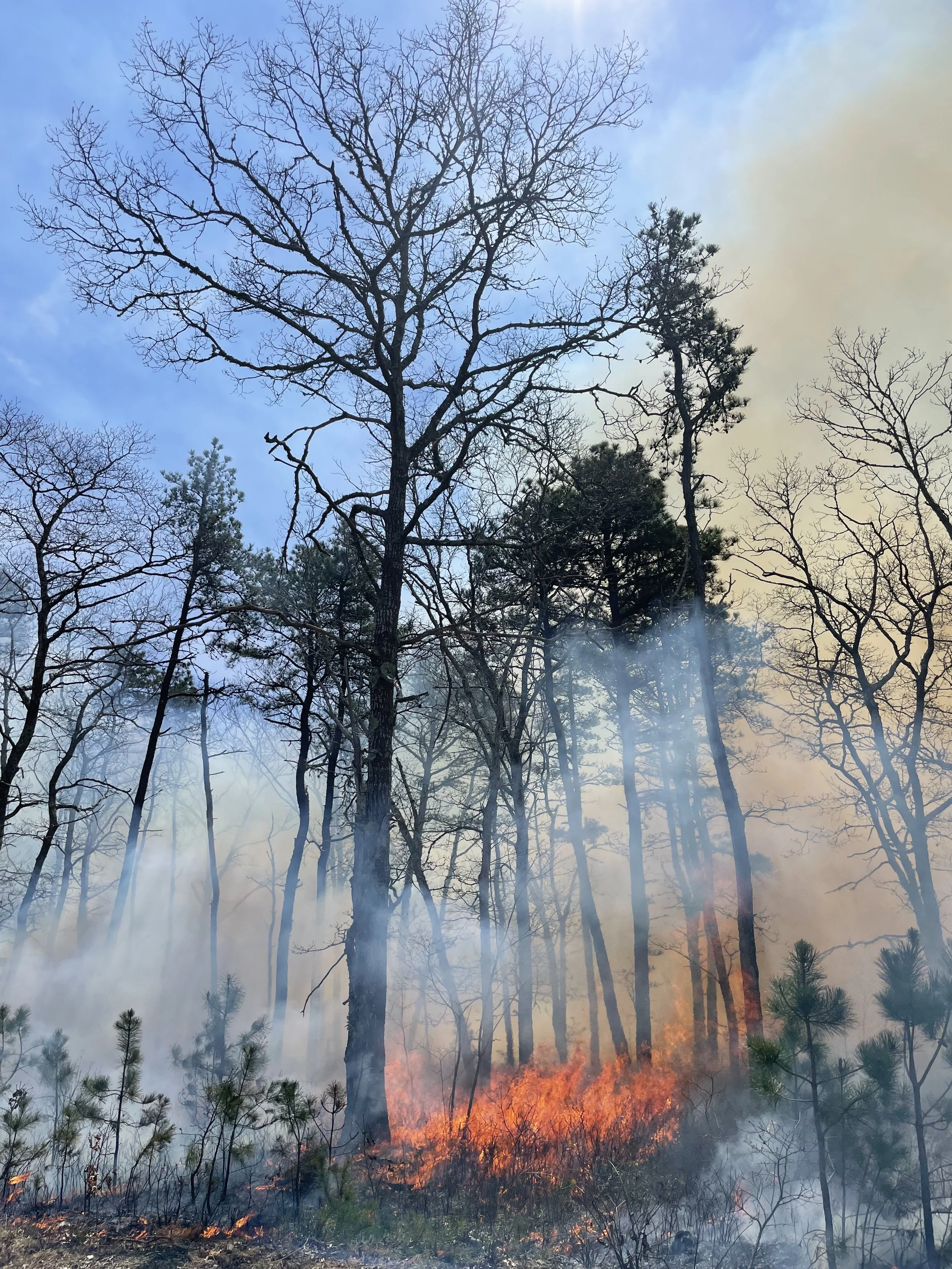
Without prescribed fires, historic fire cycles are altered, resulting in the build up of fire fuel (flammable material in forests, like brush), and damage to food bearing plants and trees.
An increased chance of wildfires due to fuel buildup can threaten the land, humans structures, and plant, animal, and human life.
Prescribed burns also promote healthy growth of native plants, are critical for maintaining biodiversity, and discourage invasive species.
For more information, click here.
-
Although any fire does contain some inherent risk, prescribed fire is also about risk reduction and is the key to preventing wildland fire.
Prescribed fires are only conducted under prescribed fire conditions which follow a strict set of guidelines to minimize and mitigate risk to participants and the community at large.
Learn more here.
-
Please reach out if you need a place to stay during the training, and we can connect you with a homestay.
-
You are welcome to join for our Sunday programming. This is a movement for everyone!
Please let us know you’re coming on our sign up page and consider a suggested donation of $100 to help cover the cost of programming and kickstart our Ignite fund.